Managing Houses in Multiple Occupation (HMOs) in London comes with significant fire safety responsibilities. Ensuring fire safety compliance is not only a legal obligation but also essential to protect tenants and property. This blog provides a comprehensive overview of the laws, processes, certification procedures, council requirements, and pricing related to fire safety compliance for HMOs in London. Landlords will gain essential insights to confidently manage their properties while meeting all regulatory standards.
Legal Framework for Fire Safety in HMOs
Under the Regulatory Reform (Fire Safety) Order 2005, landlords and “responsible persons” must carry out suitable and sufficient fire risk assessments for HMOs. The Fire Safety (England) Regulations 2022 further strengthen these duties, requiring landlords to ensure adequate fire detection, alarm systems, fire doors, escape routes, and emergency lighting are in place and maintained.
HMOs are subject to specific licensing regimes enforced by London borough councils, which include strict fire safety conditions. Failure to comply with these regulations can result in fines, prosecution, or revocation of licenses.
Fire Safety Assessment and Certification Process
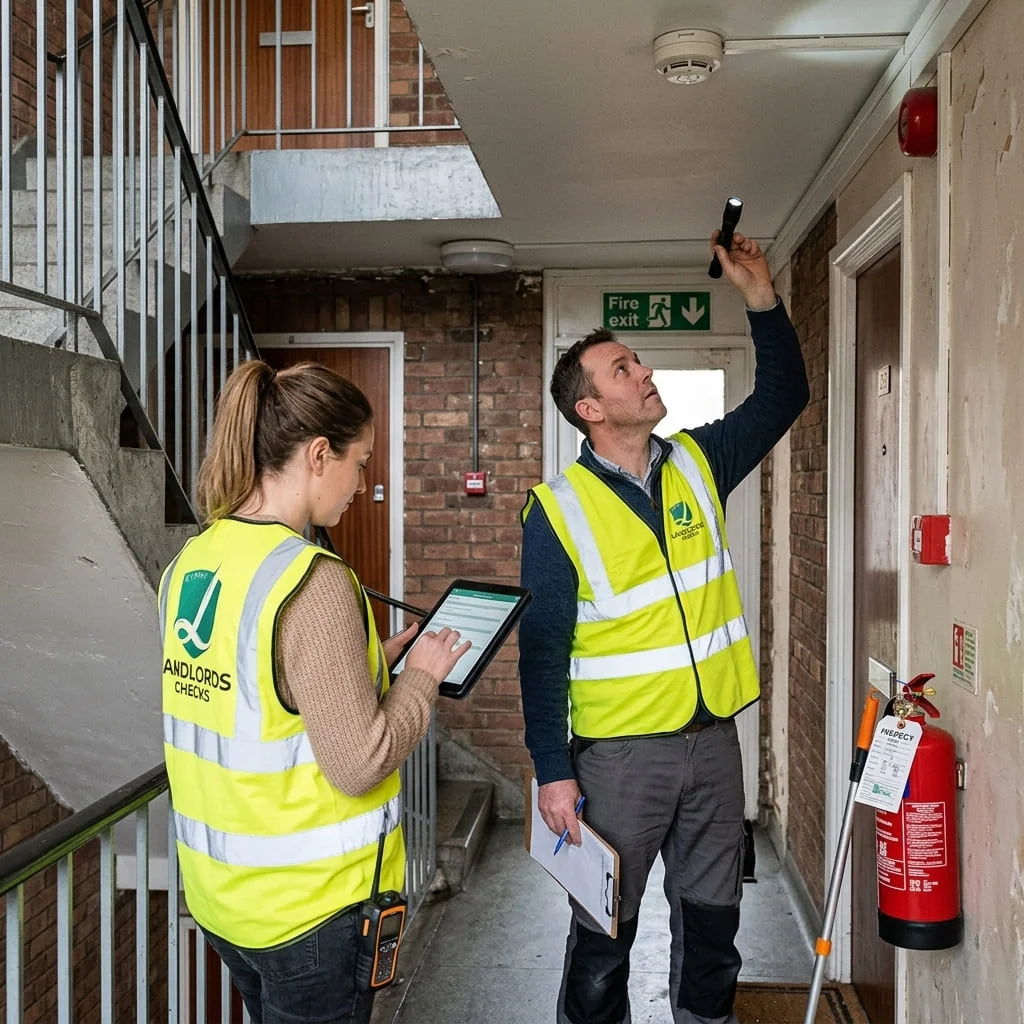
The cornerstone of compliance is a thorough fire risk assessment conducted by a qualified fire safety professional. The process includes:
- Identifying potential fire hazards such as cooking equipment, electrical faults, and flammable materials.
- Assessing the risk to tenants, including those with limited mobility or other vulnerabilities.
- Evaluating existing fire safety measures like smoke alarms, fire doors, emergency lighting, and escape routes.
- Recommending improvements to reduce or eliminate risks.
- Issuing a Fire Safety Certificate or detailed report documenting compliance and necessary actions.
Regular reviews and updates of the fire risk assessment are mandatory, especially after property alterations or changes in occupancy[1][5][9].
Council Requirements in London
London councils require landlords to submit fire safety evidence as part of HMO licensing applications and renewals. This includes:
- Valid Fire Safety Certificates or risk assessment reports.
- Proof of installation and maintenance of fire alarms and emergency lighting.
- Documentation of fire door inspections and servicing.
- Compliance with any additional local fire safety conditions.
Councils may conduct inspections and enforce compliance through fines or license revocation if standards are not met.
Pricing of Fire Safety Compliance Services
Costs vary depending on property size, number of occupants, and complexity of fire safety systems. Typical price ranges include:
- Fire risk assessments and certification: £100 to £300 for small to medium HMOs.
- Installation or servicing of fire alarms and emergency lighting: £150 to £500 or more.
- Fire door inspection and certification: from £120 upwards.
- Bundled service packages often provide cost savings for landlords managing multiple properties.
Obtaining quotes from qualified providers ensures competitive pricing and quality service.
Booking Your Fire Safety Compliance Services
For landlords seeking expert fire safety compliance services for HMOs in London, Landlords Checks Limited offers comprehensive solutions. Their fully qualified fire risk assessors provide detailed fire risk assessments, certification, and practical recommendations tailored to your property.
You can easily book your fire safety compliance for HMOs online. Their team offers flexible scheduling and ensures your property meets all legal requirements.










 Fire Risk Assessment in London: The Definitive 2026 Guide for Landlords
 Which Companies Provide Landlord Safety Certificates with Free Follow-Up Inspections?
 Which Service Offers Emergency Landlord Safety Certificate Renewals?
 Where Can I Find a Landlord Electrical Safety Certificate Provider?
 Who Provides Landlord Gas Safety Certificates with Online Booking?