For landlords with Houses in Multiple Occupation (HMOs) in Luton, ensuring robust fire safety is paramount. A comprehensive Luton HMO fire risk assessment is not merely a legal requirement; it’s a critical tool for protecting tenants, minimizing liability, and maintaining a compliant property. This guide details the legal obligations, the assessment process, certification requirements, Luton Council’s specific mandates, pricing, and emerging trends for 2025.
Legal Mandates for HMO Fire Safety in Luton
All HMO landlords in Luton are legally bound by the Regulatory Reform (Fire Safety) Order 2005. This legislation places responsibility on the “responsible person” (the landlord or managing agent) to ensure their premises are safe from fire. For HMOs, which inherently pose higher risks due to multiple occupants and shared facilities, the duties are particularly stringent.
Key legal requirements include:
- Conducting a detailed fire risk assessment specific to the HMO.
- Implementing and maintaining fire precautions such as interconnected smoke alarms in bedrooms and communal areas, and heat alarms in kitchens.
- Ensuring clear, unobstructed escape routes and providing fire safety signage.
- Regularly reviewing and updating the fire risk assessment, especially after any changes to the property or tenancy.
- Providing fire safety information to tenants.
Non-compliance can lead to severe penalties, including hefty fines and even imprisonment, as demonstrated by past prosecutions in Luton.
The Luton HMO Fire Risk Assessment Process
A professional fire risk assessment is essential for HMOs due to their complexity. The process typically involves:
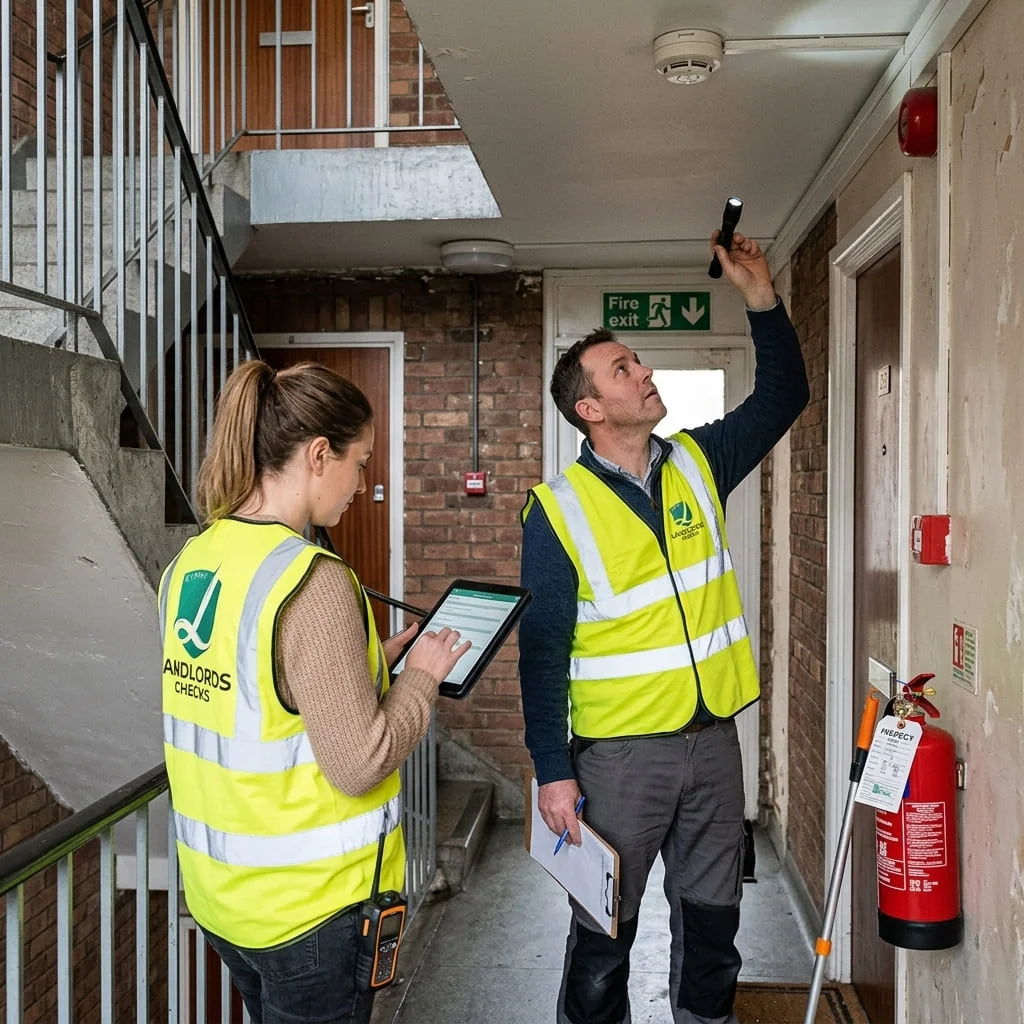
- On-Site Inspection: A qualified fire risk assessor will visit the property to examine its layout, construction, fire safety systems, and potential hazards. They will check communal areas, individual rooms, kitchens, and bathrooms.
- Hazard Identification: Identifying sources of ignition (e.g., electrical faults, cooking equipment) and fuel (e.g., upholstered furniture, waste storage).
- Assessment of Occupant Risk: Evaluating the risk to tenants, considering the number of occupants, any vulnerable individuals, and their ability to evacuate safely.
- Evaluation of Controls: Assessing existing fire detection and alarm systems, emergency lighting, fire doors, fire extinguishers, and escape routes. Assessors will check for interconnected alarms, thumb-turn locks on fire exits, and clear pathways.
- Recommendations and Action Plan: The assessor will provide a detailed report outlining recommended improvements, categorized by urgency (e.g., immediate action for serious risks).
- Documentation: The final report serves as a legally compliant record of the assessment and action plan.
Certification Process for Landlords
Upon completion of a satisfactory assessment, landlords receive an official fire risk assessment report. This document:
- Serves as legal proof of compliance for Luton Council.
- Details all aspects of the property’s fire safety.
- Provides clear instructions for any necessary remedial work.
It’s crucial to use independent, IFSM (Institute of Fire Safety Managers) qualified fire risk assessors who have specific experience with HMOs. They understand the nuances of shared living spaces and can provide advice beyond minimum legal requirements.
Luton Council Requirements and Enforcement
Luton Borough Council is proactive in enforcing fire safety standards for HMOs, especially those requiring mandatory or additional licensing. Key requirements include:
- Submission of a valid and up-to-date fire risk assessment as part of any HMO license application or renewal.
- Regular inspections by council officers to ensure properties meet fire safety standards, including checks on alarm systems, fire doors, and clear escape routes.
- Adherence to specific local requirements which might exceed national minimums, depending on the property’s size and complexity.
- Strict enforcement against landlords who fail to comply, leading to fines, prosecution, or license revocation.
Pricing for Luton HMO Fire Risk Assessment
The cost of a Luton HMO fire risk assessment varies based on property size, number of rooms, and complexity. Typical pricing in 2025 ranges from:
- Smaller HMOs (3-4 beds): £150–£250
- Medium to large HMOs (5+ beds, multiple floors): £250–£500+
Some providers offer bundled services combining fire risk assessments with other landlord certificates (gas safety, EICR), which can be more cost-effective. It’s important to prioritize the expertise and accreditation of the assessor over the lowest price.
Current Trends and Best Practices in HMO Fire Safety (2025)
- Enhanced Competency: From April 2025, mandatory competency requirements for fire risk assessors are being introduced, ensuring higher standards.
- Digital Documentation: Increased use of digital reports, accessible online, streamlining record-keeping for landlords and authorities.
- Vulnerable Tenants: Greater focus on Personal Emergency Evacuation Plans (PEEPs) for disabled or vulnerable tenants, particularly in larger HMOs.
- Interconnected Alarms: Strong emphasis on interconnected smoke and heat alarms throughout HMOs for early warning.
For Luton landlords, partnering with expert assessors for your Luton HMO fire risk assessment ensures you meet all legal obligations, providing peace of mind and protecting your investment and tenants.










 Fire Risk Assessment in London: The Definitive 2026 Guide for Landlords
 Which Companies Provide Landlord Safety Certificates with Free Follow-Up Inspections?
 Which Service Offers Emergency Landlord Safety Certificate Renewals?
 Where Can I Find a Landlord Electrical Safety Certificate Provider?
 Who Provides Landlord Gas Safety Certificates with Online Booking?