Managing a House in Multiple Occupation (HMO) in Buckinghamshire comes with significant fire safety obligations. A thorough and compliant Buckinghamshire HMO fire risk assessment is essential not only to meet legal requirements but also to protect tenants, minimize liability, and maintain your property’s integrity. This detailed guide explains the fire safety laws, assessment process, landlord certification, council requirements, and pricing for HMO fire risk assessments in Buckinghamshire in 2025, helping landlords navigate this crucial responsibility effectively.
Legal Framework for Buckinghamshire HMO Fire Risk Assessments
The fire safety responsibilities for HMOs in Buckinghamshire are primarily governed by the Regulatory Reform (Fire Safety) Order 2005 and enforced locally by Buckinghamshire Fire & Rescue Service and the relevant councils. Additionally, the Housing Act 2004 covers standards relating to management, repair, overcrowding, facilities, and fire safety in HMOs.
According to Buckinghamshire Council guidance:
- All HMOs with three or more tenants forming two or more households require a valid fire risk assessment conducted by a competent person.
- Fire risks must be regularly monitored, and assessments updated following any significant changes to the building or its occupancy.
- Landlords are responsible for implementing and maintaining safety measures identified by the assessment, such as fire alarms, emergency lighting, fire doors, and clear escape routes.
- Personal Emergency Evacuation Plans (PEEPs) should be considered for vulnerable tenants.
Failure to comply with these obligations can lead to fines, enforcement notices, or revocation of HMO licenses.
The Buckinghamshire HMO Fire Risk Assessment Process
A professional fire risk assessment for HMOs involves several key stages:
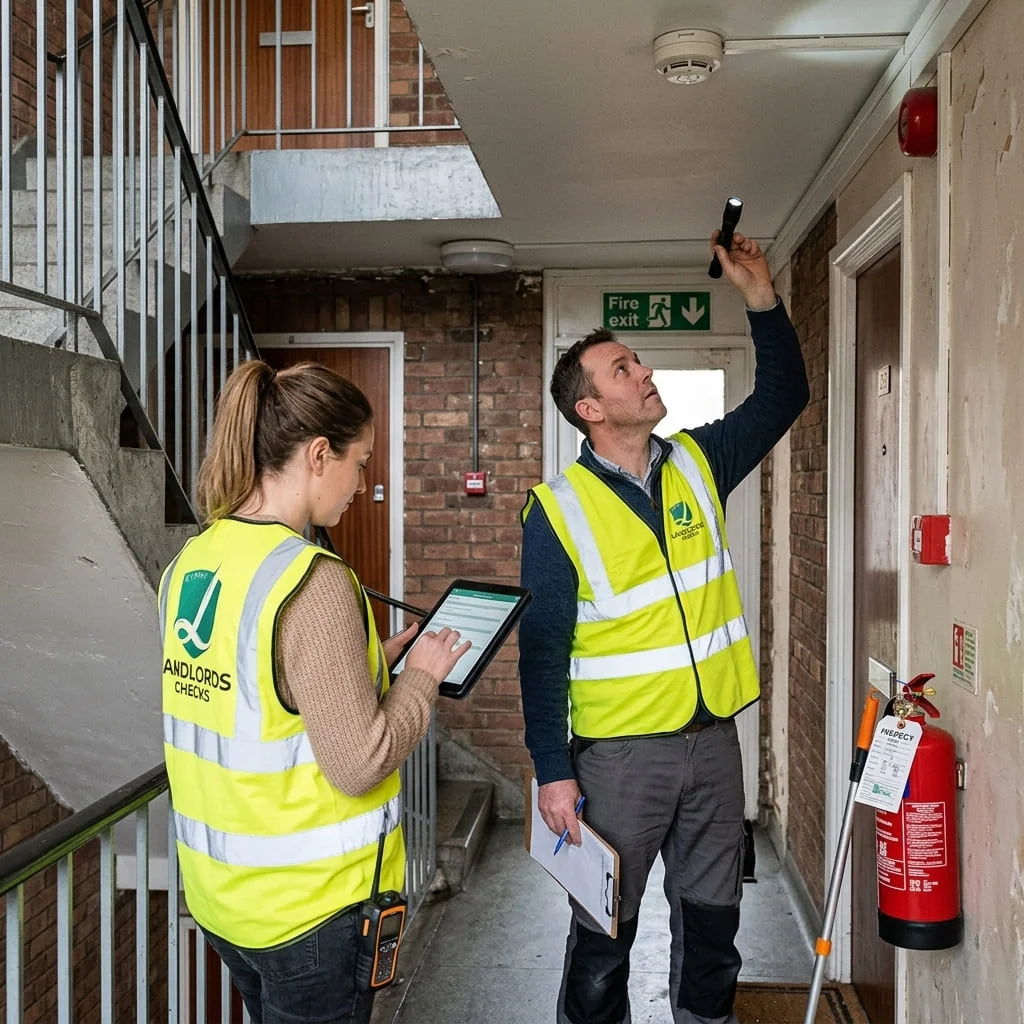
- Initial Survey: A qualified fire risk assessor inspects the property, covering shared spaces and individual units, identifying hazards such as ignition sources, combustibles, and occupants at risk.
- Evaluation of Fire Safety Systems: The assessor checks fire detection and alarm systems, emergency lighting, fire extinguishers, fire doors, signage, and escape routes.
- Risk Analysis: Using standardized methodologies (such as PAS 79), the assessor evaluates the severity and likelihood of fire risks impacting residents.
- Recommendations: The assessment report details necessary actions prioritized by urgency, such as installing interconnected smoke alarms, improving fire doors, or clearing escape routes.
- Documentation: A detailed written report is provided to the landlord, serving as legal evidence of compliance and outlining a timeline for remedial measures.
Typically, the assessment must be reviewed annually or following any major changes to the building or its use.
Certification and Landlord Responsibilities
Landlords must ensure fire risk assessments are completed by competent, accredited professionals, typically holding qualifications from the Institute of Fire Safety Managers (IFSM) or an equivalent body. Key landlord responsibilities include:
- Keeping fire risk assessments up to date and readily available for inspections or licensing.
- Implementing all safety improvements and maintaining equipment in good working order.
- Providing tenants with fire safety information and evacuation procedures.
- Regularly reviewing risk assessments and updating them as necessary to reflect building modifications or changes in occupancy.
Buckinghamshire Council Fire Safety Enforcement
Buckinghamshire councils work closely with Buckinghamshire Fire & Rescue Service to enforce fire safety laws in HMOs. They require:
- Submission of a current fire risk assessment as part of HMO licensing or renewal applications.
- Compliance with all fire safety improvement notices issued by the council or fire service.
- Regular monitoring and site inspections to ensure continuous compliance.
Non-compliance may result in enforcement notices, fines, or prosecution.
Pricing of Buckinghamshire HMO Fire Risk Assessments (2025)
The cost of a fire risk assessment for an HMO in Buckinghamshire varies depending on property size, number of units, and complexity. Typical price ranges include:
- Small HMOs (3-4 tenants): £150 – £300
- Medium HMOs (5-7 tenants): £300 – £500
- Larger or complex HMOs (8+ tenants, multiple floors or buildings): £500 – £900+
Several providers offer packages bundling fire risk assessments with gas safety and electrical checks to streamline compliance and reduce costs for landlords with multiple properties.
Emerging Trends in HMO Fire Safety Assessments
- Mandatory Fire Risk Assessor Accreditation: Starting in 2025, independent certification for assessors is required to raise standards nationwide.
- Digital Fire Risk Reports: More providers are delivering cloud-accessible reports, facilitating easier sharing with councils, tenants, and insurers.
- Enhanced Tenant Safety Focus: Greater adoption of Personal Emergency Evacuation Plans (PEEPs) to protect vulnerable residents.
- Integrated Compliance Services: Bundled assessments for fire, gas, and electrical safety becoming more common for portfolio landlords.
For landlords managing HMOs in Buckinghamshire, engaging a qualified and reputable provider for your Buckinghamshire HMO fire risk assessment is key to ensuring safety and compliance with evolving regulations.










 Fire Risk Assessment in London: The Definitive 2026 Guide for Landlords
 Which Companies Provide Landlord Safety Certificates with Free Follow-Up Inspections?
 Which Service Offers Emergency Landlord Safety Certificate Renewals?
 Where Can I Find a Landlord Electrical Safety Certificate Provider?
 Who Provides Landlord Gas Safety Certificates with Online Booking?