Ensuring that your property complies with building regulations is a critical responsibility for landlords and property owners in London. The building regulations compliance certificates London serve as a testament that your property meets the required safety, health, and structural standards mandated by law. With evolving regulations and strict council enforcement, understanding the legal framework, certification process, council demands, and pricing for compliance certificates is vital for landlords in 2025.
Understanding Building Regulations and Compliance Certificates
Building regulations are statutory requirements designed to safeguard health and safety in building design, construction, and use. They cover structural integrity, fire safety, ventilation, drainage, thermal efficiency, accessibility, and more. Compliance certificates are issued to confirm that building works meet these standards.
Common certificates related to building regulations compliance include:
- Completion Certificate: Issued by local council building control or approved inspectors once building works are finished and inspected.
- Fire Safety Certificate: Required for certain works related to fire precautions, confirming adherence to fire safety standards.
- Electrical and Gas Safety Certificates: Demonstrate compliance with safety in installed systems.
Failure to secure proper certificates can lead to enforcement notices, fines, invalidated insurance, and difficulties in property transactions.
The Legal Framework for Landlords in London
London landlords must comply with regulations including:
- Building Act 1984 and Building Regulations 2010: Governing construction standards.
- Regulatory Reform (Fire Safety) Order 2005: Mandates fire risk assessments and fire safety management, critical in multi-occupancy properties.
- Gas Safety (Installation and Use) Regulations 1998: Requires annual gas safety checks by Gas Safe registered engineers.
- Electrical Safety Standards in the Private Rented Sector Regulations 2020: Requires electrical installations testing every five years.
- Local council licensing schemes and selective licensing: Enforce strict safety documentation and inspection regimes for HMOs and other rentals.
Landlords are responsible for ensuring compliance throughout tenancy and must provide certificates to tenants and councils as proof.
Process of Obtaining Building Regulations Compliance Certificates
- Determine the Relevant Certificate: Identify the permits or certificates required, depending on planned works or property status.
- Notify the Local Authority: Submit notice of works to the council’s building control or engage an approved inspector.
- Schedule Inspections: Inspections will occur at key stages to verify compliance.
- Complete the Work: Build or modify according to approved plans and regulations.
- Final Inspection & Certification: Upon satisfactory completion, a completion certificate and other related certificates are issued.
- Document Retention and Sharing: Keep copies and share certificates with tenants, agents, and councils as needed.
This structured approach guarantees legal conformity and smooth property management.
Council Requirements and Enforcement in London
Each London borough may add specific requirements but commonly:
- Valid building regulation certificates must be submitted during licensing or sales processes.
- Councils perform routine or complaint-driven inspections checking landlord compliance.
- Failure to produce appropriate certificates can lead to enforcement notices, fines, or prosecution.
- HMOs face particularly stringent checks due to resident safety considerations.
Checking your borough’s official housing or building control website for updates is essential to avoid penalties.
Pricing Guidelines for Compliance Certificates in London
Costs are variable depending on property complexity and certificate type:
- Standard Building Regulation Completion Certificate: £150 to £500 depending on property size and type.
- Fire Safety and Risk Assessments: £80 to £300 or more for larger properties or complex scenarios.
- Gas Safety Certificates: £60 to £90 annually.
- Electrical Installation Condition Reports (EICR): £100 to £200 per inspection.
- Bundle packages available for multiple certificates to reduce costs and streamline compliance.
Choosing accredited providers offering transparency in fees prevents unexpected expenses.
Booking Your Building Regulations Compliance Certificates London
Landlords aiming to secure credible and fast service can book their building regulations compliance certificates London through trusted accredited professionals. Whether it is fire risk assessments, electrical or gas safety checks, certified inspectors provide detailed reports and legal certificates that facilitate rental or sales processes while ensuring tenant safety.










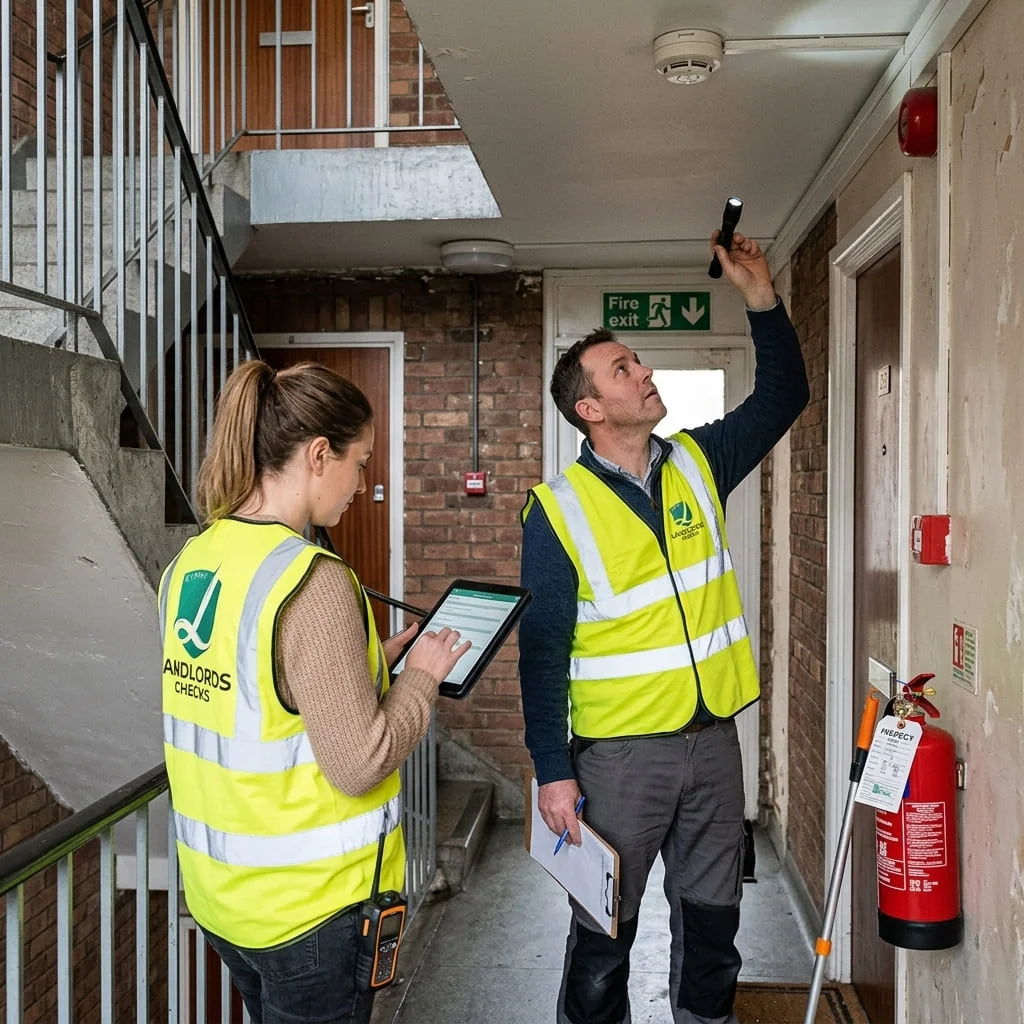 Fire Risk Assessment in London: The Definitive 2026 Guide for Landlords
 Which Companies Provide Landlord Safety Certificates with Free Follow-Up Inspections?
 Which Service Offers Emergency Landlord Safety Certificate Renewals?
 Where Can I Find a Landlord Electrical Safety Certificate Provider?
 Who Provides Landlord Gas Safety Certificates with Online Booking?