Fire safety is paramount in Houses in Multiple Occupation (HMOs), given the higher risks associated with multiple tenants and shared spaces. For landlords in Charnwood, ensuring compliance with fire safety legislation through a thorough Charnwood HMO fire risk assessment is not only a legal requirement but also a critical step in protecting tenants and property investments in 2025.
Legal Framework Governing HMO Fire Safety in Charnwood
The responsibility for fire safety in HMOs largely stems from the Regulatory Reform (Fire Safety) Order 2005. This legislation mandates that the “responsible person”—typically the landlord or managing agent—ensures the premises comply with fire safety standards by carrying out suitable and sufficient fire risk assessments.
Specifically for HMOs, local authorities such as Charnwood Borough Council enforce additional licensing conditions that reinforce fire safety checks. Landlords must ensure:
- Common areas and escape routes are safe and unobstructed.
- Fire detection and alarm systems meet current technical standards.
- Emergency lighting and signage are correctly installed and maintained.
- Personal Emergency Evacuation Plans (PEEPs) are prepared for occupants with special needs.
- Fire doors, extinguishers, and other safety equipment are regularly inspected and serviced.
Failure to meet these requirements risks enforcement action, including heavy fines, legal prosecution, or license revocation.
Charnwood HMO Fire Risk Assessment Process
A professional fire risk assessment is tailored to identify hazards and evaluate risk specific to HMOs. The process includes:
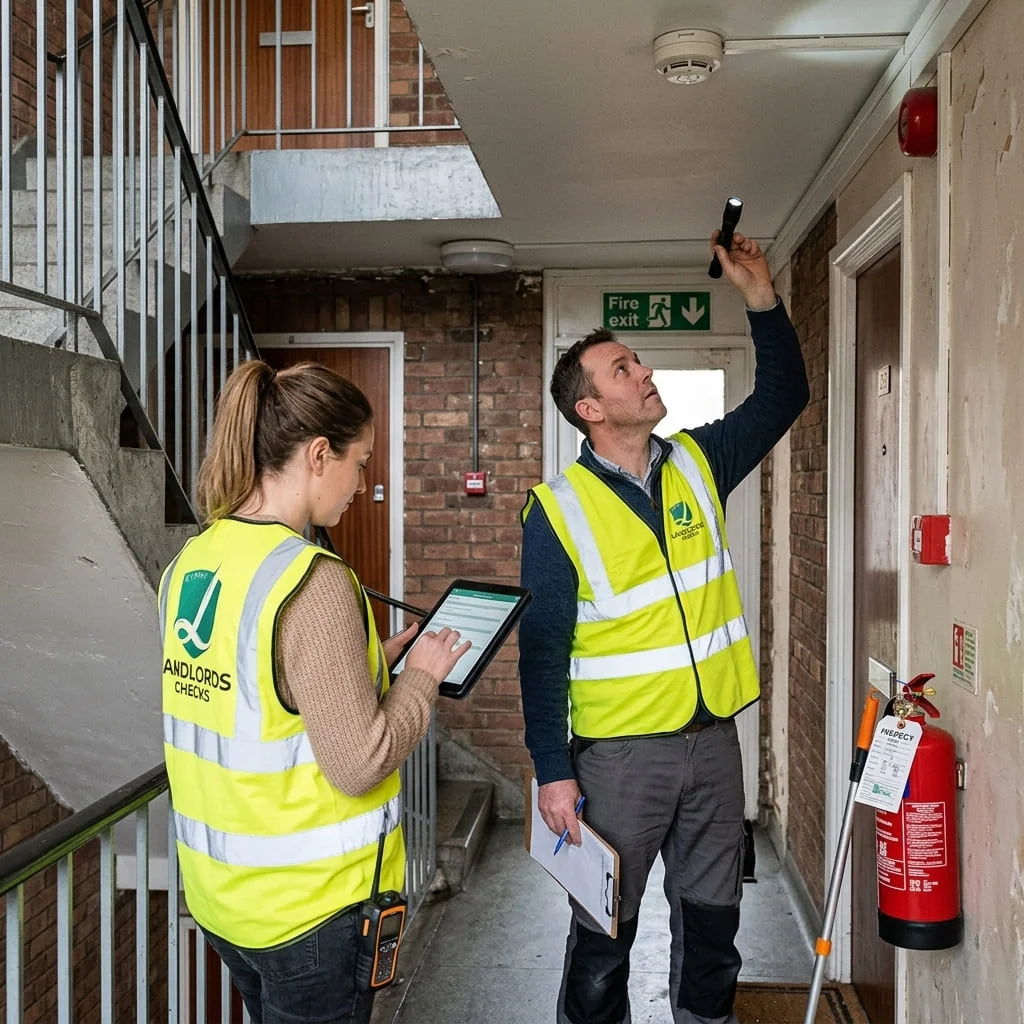
- Detailed On-Site Inspection: Examining all communal areas, bedrooms, escape routes, fire safety equipment, and electrical/gas installations for potential fire hazards.
- Risk Evaluation: Considering tenancy arrangements, occupancy levels, and tenant behaviour that can impact fire risk.
- Documentation: Preparing a comprehensive report detailing hazards, risk levels, and recommended remedial actions.
- Compliance Advice: Guidance on meeting Charnwood licensing standards and national fire safety legislation.
- Follow-Up: Scheduling periodic reviews, particularly after property modifications or significant changes in tenancy.
Qualified assessors, typically accredited by institutions such as the Institute of Fire Safety Managers (IFSM), use up-to-date legislation, guidance from local authorities, and best practice standards to carry out these assessments professionally and thoroughly.
Certification and Reporting
Upon completion, landlords receive a formal fire risk assessment report that records:
- Identified fire hazards and persons at risk within the HMO
- Status of fire safety equipment and maintenance
- Recommendations on improvements like alarm upgrades, fire door installations, or escape route modifications
- Compliance confirmation aligned with Charnwood Council’s licensing requirements
- Timeframes for remedial works with prioritisation of critical risks
Retention of the report and evidence of any remedial actions is essential for landlord records and inspection by council officers or the Fire and Rescue Service.
Council Requirements Specific to Charnwood
Charnwood Borough Council requires valid and current fire risk assessments as part of its HMO licensing schemes. The council periodically audits licensed HMOs to enforce compliance with fire safety legislation including:
- Mandatory submission of risk assessments with new licence applications and renewals
- Regular inspection visits with focus on alarm systems, escape routes, and hazard mitigation
- Enforcement notice issuance for non-compliance with strict deadlines
- Requirement to install smoke and carbon monoxide alarms per the Smoke and Carbon Monoxide Alarm Regulations 2022
- Adherence to the national Housing Health and Safety Rating System (HHSRS) and fire safety standards
Landlords must cooperate fully with the council’s fire safety officers to avoid costly penalties and maintain their licence.
Pricing for Charnwood HMO Fire Risk Assessment Services
Pricing varies depending on the size, occupancy, and complexity of the HMO property. Typical 2025 price ranges are:
- Small HMOs (3-5 tenants): £120 to £200
- Larger HMOs with communal kitchens and living spaces: £200 to £350
- Multi-storey or complex HMOs: Prices on application following survey
Landlords often benefit from combined packages of compliance services including gas safety certificates, electrical inspections, and fire risk assessments, reducing costs and simplifying regulatory management.
Emerging Trends in HMO Fire Safety
- Increased use of wireless fire alarm systems for ease of installation and improved detection capabilities
- More frequent fire risk assessment renewals encouraged by councils following national fire safety reviews
- Digital record keeping and tenant fire safety training becoming standard practice
- Enhanced scrutiny on emergency evacuation plans incorporating technology and tenant communication protocols
Keeping abreast of these trends and working with expert providers helps landlords stay compliant and protect their tenants effectively.
For landlords seeking professional, accredited Charnwood HMO fire risk assessment services, trusted providers offer fast turnaround, expert advice, and detailed reports tailored to meet council licensing and legal demands.










 Fire Risk Assessment in London: The Definitive 2026 Guide for Landlords
 Which Companies Provide Landlord Safety Certificates with Free Follow-Up Inspections?
 Which Service Offers Emergency Landlord Safety Certificate Renewals?
 Where Can I Find a Landlord Electrical Safety Certificate Provider?
 Who Provides Landlord Gas Safety Certificates with Online Booking?