Landlords in London carry a significant responsibility to ensure their rental properties meet stringent fire safety standards. Conducting a comprehensive fire risk assessment is a legal requirement under the Regulatory Reform (Fire Safety) Order 2005. This document helps landlords identify, manage, and mitigate fire hazards, ultimately protecting tenants and property. This blog offers a detailed fire risk assessment checklist for landlords, covering laws, assessment processes, certification, council requirements, and typical pricing in London.
Legal Requirements for Landlords Regarding Fire Safety
The Regulatory Reform (Fire Safety) Order 2005 mandates that landlords, as “responsible persons,” must:
- Conduct a suitable fire risk assessment for rental premises, especially for Houses in Multiple Occupation (HMOs) and properties with communal areas.
- Identify fire hazards and assess the risks to tenants, visitors, and property.
- Implement appropriate fire safety measures such as smoke alarms, fire exits, extinguishers, and signage.
- Record the assessment and any remedial actions if the property houses five or more people.
- Review and update the fire risk assessment regularly or after changes to the property.
Failure to meet these legal duties can lead to prosecution, fines, or imprisonment. London boroughs (e.g., Camden, Hackney, Westminster) rigorously enforce these through licensing and inspections.
Key Components of a Fire Risk Assessment Checklist
A thorough fire risk assessment should cover the following areas:
- Hazard Identification: Sources of ignition (e.g., electrical appliances, heating), fuel (furniture, waste), and oxygen flow (ventilation).
- Escape Routes: Ensure clear, unobstructed fire exits with emergency lighting and signage. Check doors for proper operation and fire resistance.
- Fire Detection and Alarm Systems: Confirm functioning smoke detectors, fire alarms, and carbon monoxide alarms where applicable.
- Fire-Fighting Equipment: Verify appropriate extinguishers are in place, maintained, and accessible.
- Means of Raising Alarm: Ensure tenants can raise an alert easily, especially in communal or larger dwellings.
- Training and Emergency Plans: Make sure tenants and staff know evacuation procedures and that escape plans are documented.
- Electrical Installations and Appliances: Check regular inspection records, including PAT testing and EICRs.
- Storage and Housekeeping: Assess storage of flammable materials and waste management to reduce fire load.
- Special Provisions: Consider needs of vulnerable tenants who may require tailored safety measures.
- Documentation: Record the findings comprehensively along with actions taken or planned.
Strong attention to detail in each area ensures landlord compliance and tenant safety.
Process of Obtaining a Fire Risk Assessment
- Engage a Qualified Assessor: Landlords should use accredited fire risk assessors, such as those certified by the Institute of Fire Safety Managers (IFSM).
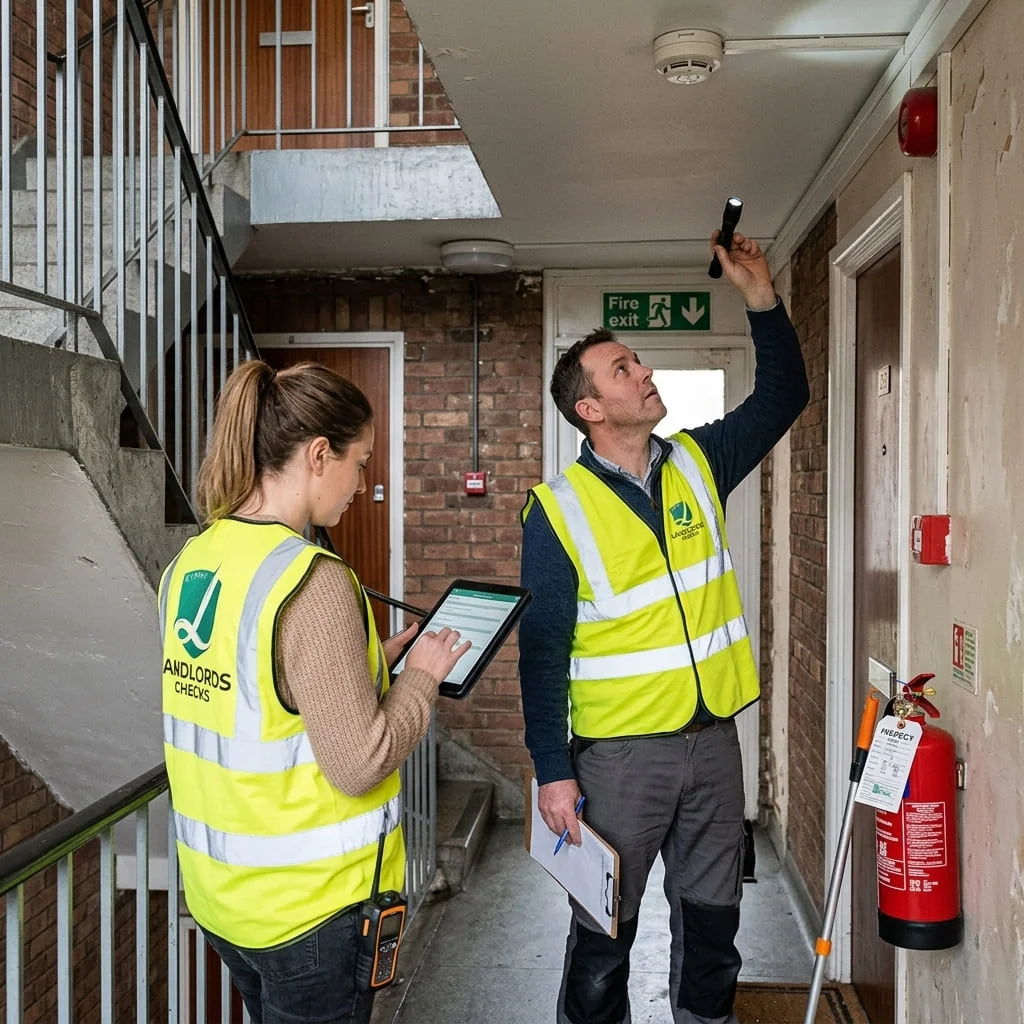
- Property Survey: The assessor inspects the property, identifying fire hazards, evaluating escape routes, and reviewing existing safety measures.
- Report Compilation: A detailed report including a checklist, recommendations, and a prioritised action plan is provided to landlords.
- Implementing Recommendations: Landlords must address identified issues promptly, ensuring necessary repairs or installations.
- Review and Update: The assessment must be reviewed regularly, annually at minimum, or after significant changes.
Qualified assessment ensures a reliable and legally defendable report.
Council Requirements in London
London borough councils require landlords to provide valid fire risk assessments when:
- Applying for or renewing HMO licenses.
- Registering properties under selective or additional licensing schemes.
- Undergoing routine inspections or responding to complaints.
Councils may issue enforcement notices, fines, or revoke licences if assessments are absent or inadequate. Landlords should consult their borough’s website for specific deadlines and requirements.
Pricing for Fire Risk Assessments in London
Costs depend on the property size, type, and complexity. Typical price ranges include:
- Small flats or single-family homes: £80–£150
- Larger HMOs or multi-unit blocks: £150–£400
- Complex commercial or mixed-use properties: £400 and above
Some providers offer bundled safety services including electrical inspections and gas safety certificates at discounted rates.
Booking a Fire Risk Assessment
Landlords looking to comply can easily book a professional fire risk assessment checklist for landlords through accredited service providers. Certified assessors deliver detailed reports and advise on compliance, helping landlords meet legal requirements and protect occupiers.










 Fire Risk Assessment in London: The Definitive 2026 Guide for Landlords
 Which Companies Provide Landlord Safety Certificates with Free Follow-Up Inspections?
 Which Service Offers Emergency Landlord Safety Certificate Renewals?
 Where Can I Find a Landlord Electrical Safety Certificate Provider?
 Who Provides Landlord Gas Safety Certificates with Online Booking?